
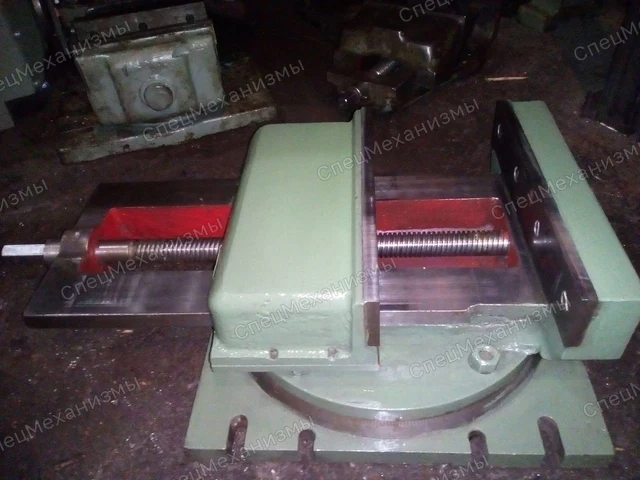
 Availability to be confirmed
Tooling for machine tools and equipment
Results: 33
Availability to be confirmed
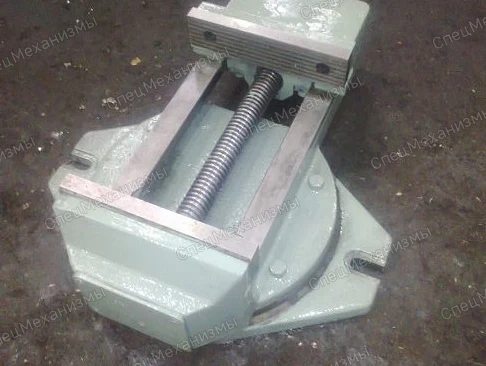 Availability to be confirmed
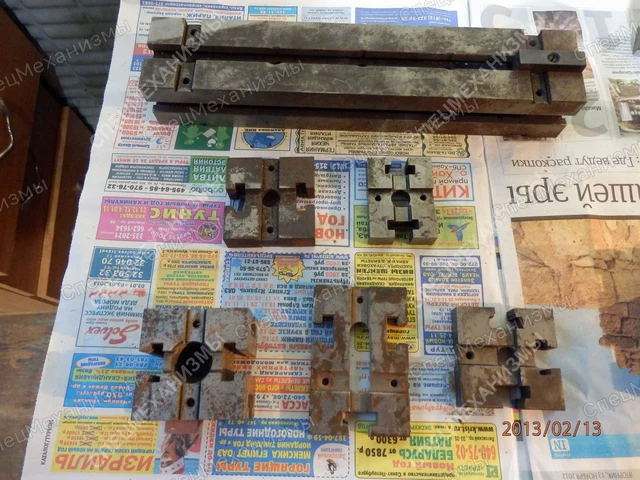 Availability to be confirmed
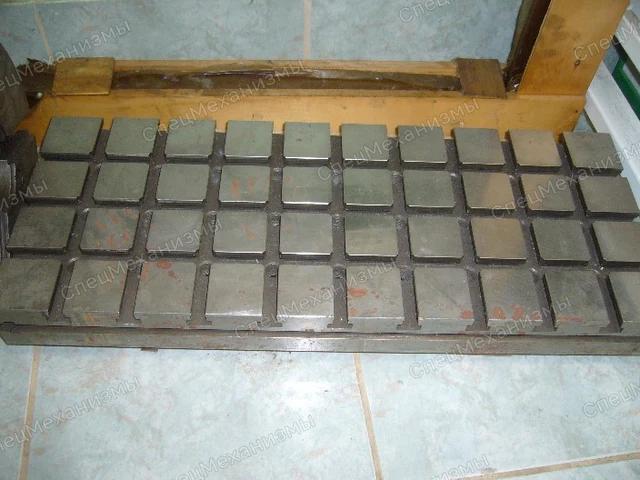 Availability to be confirmed
УСП modular fixture plate, size 600×240×65
Universal modular fixtures
- Length
- 600 mm
- Width
- 240 mm
- Thickness
- 65 mm
 Availability to be confirmed
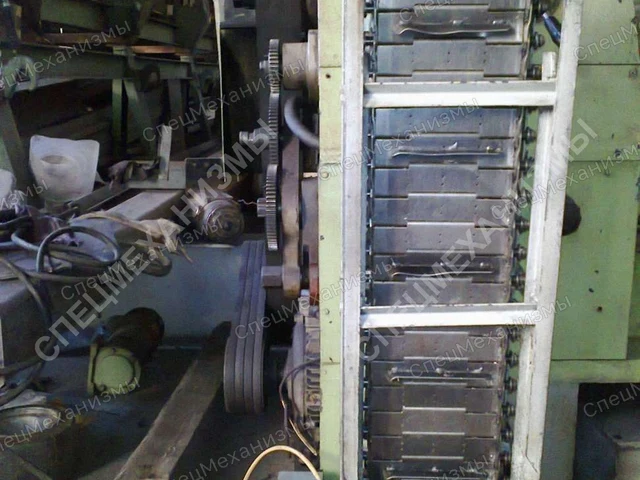
Chip removal conveyor, GOST 28733-90
Chip removal devices
- Working width of the receiving section
- 200 mm
- Working length of the receiving and discharge section
- 1200 mm
- Receiving/discharge section height
- 200 mm
 Availability to be confirmed
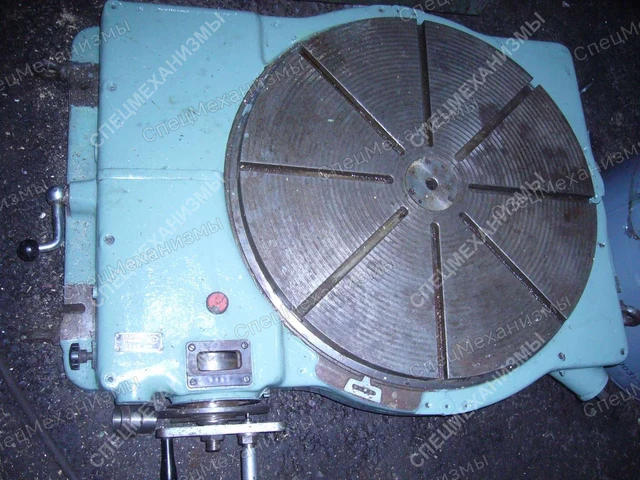
7400-4060 horizontal rotary indexing table, faceplate diameter 630 mm.
Rotary tables for milling, boring and drilling machines
- Faceplate diameter
- 630 mm
- Thickness from the base to the faceplate surface
- 205 mm
- T-slot width
- 14Н9, 14H12 mm
 Availability to be confirmed
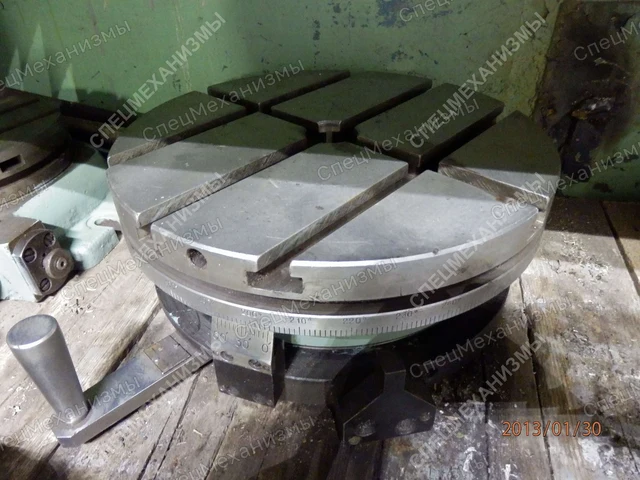
П-37 horizontal rotary table, faceplate diameter 320 mm.
Rotary tables for milling, boring and drilling machines
- Faceplate diameter
- 320 mm
 Availability to be confirmed
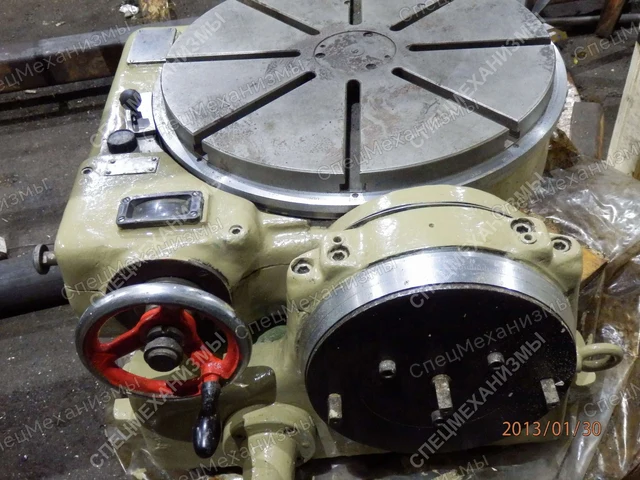
Mechanical tilting rotary table (sine table) 7400-4065, faceplate diameter 440 mm
Rotary tables for milling, boring and drilling machines
- Condition
- To be confirmed
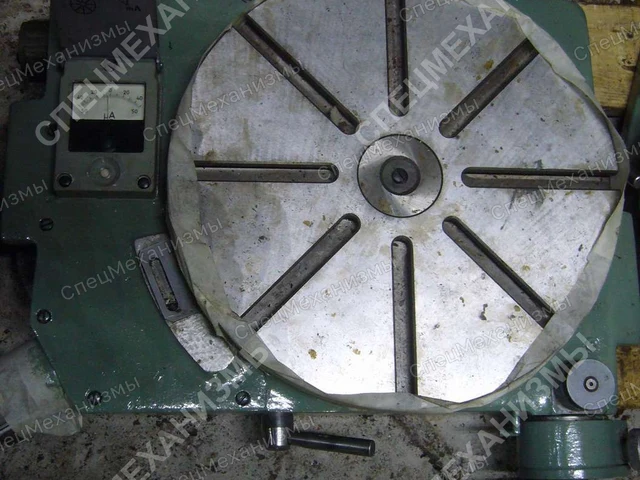 Availability to be confirmed
7400-0224 mechanical rotary coordinate table with a vernier scale, diameter 320 mm
Rotary tables for milling, boring and drilling machines
- Condition
- To be confirmed
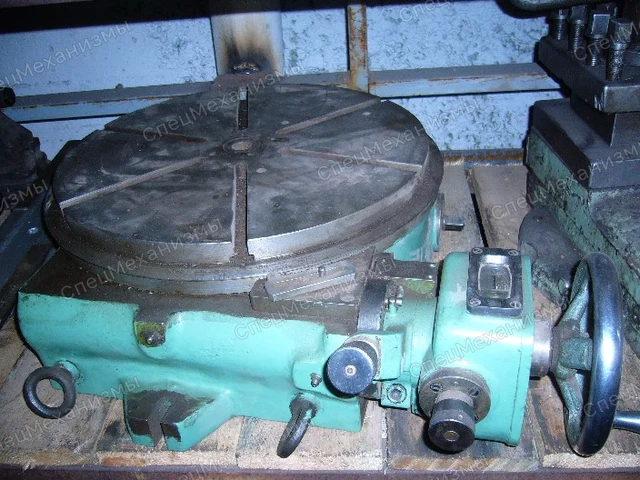 Availability to be confirmed
7204-0023-01 horizontal rotary table, faceplate diameter 400 mm.
Rotary tables for milling, boring and drilling machines
- Faceplate diameter
- 400 mm
- Thickness from the base to the faceplate surface
- 130 mm
- T-slot width
- 14Н9, 14H12 mm
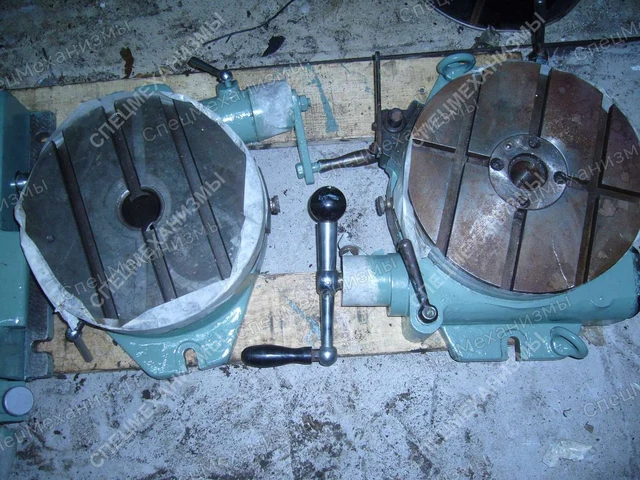 Availability to be confirmed
Horizontal rotary milling table, diameter 250 mm.
Rotary tables for milling, boring and drilling machines
- Faceplate diameter
- 250 mm
- Thickness from the base to the faceplate surface
- 125 mm
- T-slot width
- 12Н9, 12H12 mm
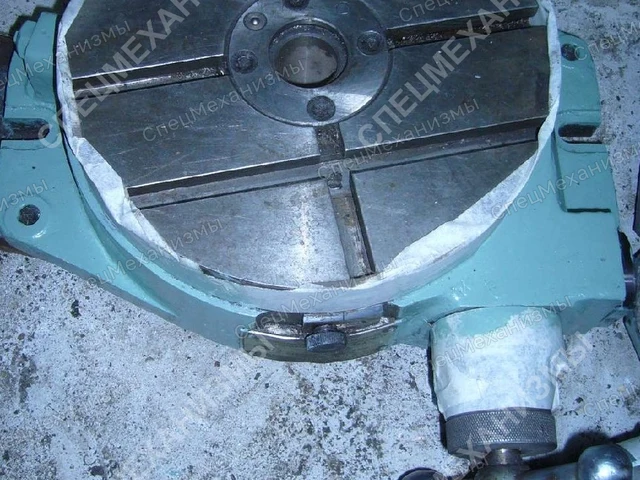 Availability to be confirmed
Horizontal rotary milling table, diameter 200 mm.
Rotary tables for milling, boring and drilling machines
- Faceplate diameter
- 200 mm
- Thickness from the base to the faceplate surface
- 110 mm
- Table taper
- Morse 3
 Availability to be confirmed
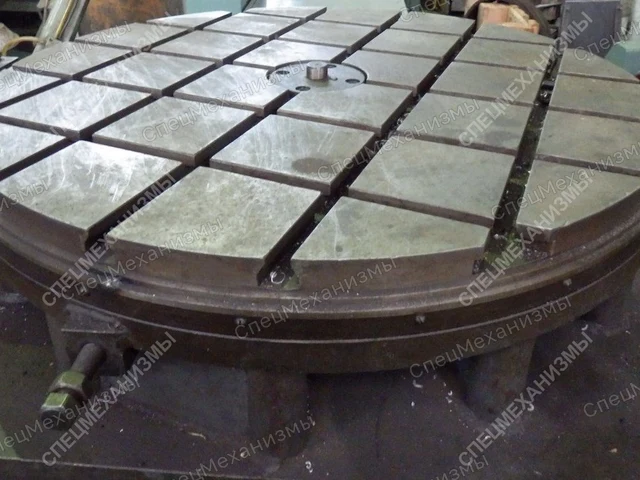
Round mounting table with T-slots, D=900 mm
Round assembly table with T-slots
- Faceplate diameter, mm
- 900
- Rotation capability
- Yes
- Stops provided
- Yes
 Availability to be confirmed
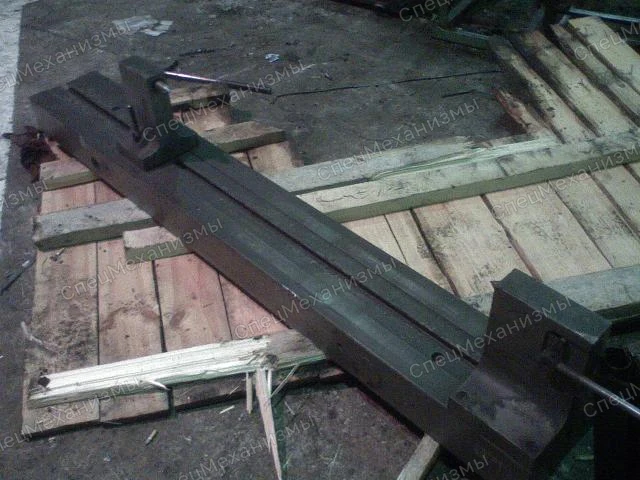
Runout checking instrument for use between centres, L=1000 mm
Instruments for checking runout between centres
- Condition
- To be confirmed
 Availability to be confirmed
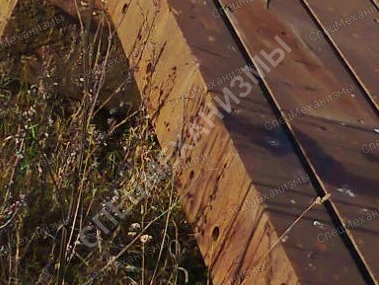
Mounting plate with T-slots, 7000×2250×300 mm.
Mounting plates with T-slots
- Length, mm
- 7000
- Width, mm
- 2250
- Thickness, mm
- 300
 Availability to be confirmed
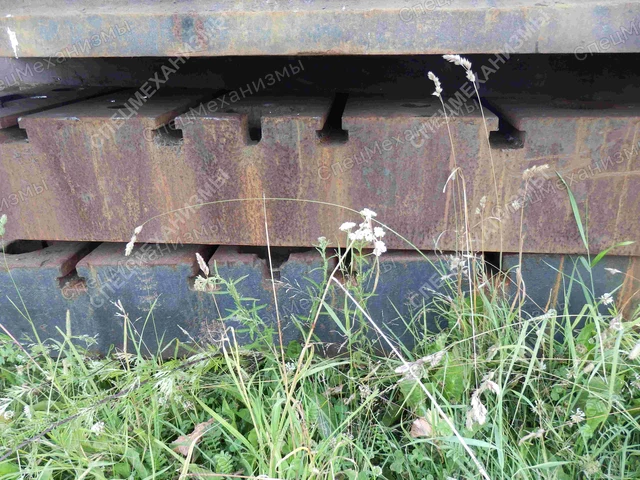
Mounting plate with T-slots, 3780×1920×250 mm.
Mounting plates with T-slots
- Length, mm
- 3780
- Width, mm
- 1920
- Thickness, mm
- 250
Availability to be confirmed
Mounting plate with T-slots, 3200×1500×250 mm.
Mounting plates with T-slots
- Length, mm
- 3200
- Width, mm
- 1500
- Thickness, mm
- 250
 Availability to be confirmed
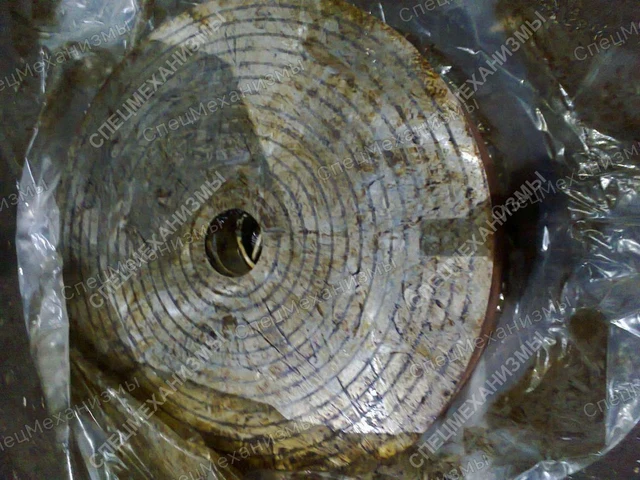
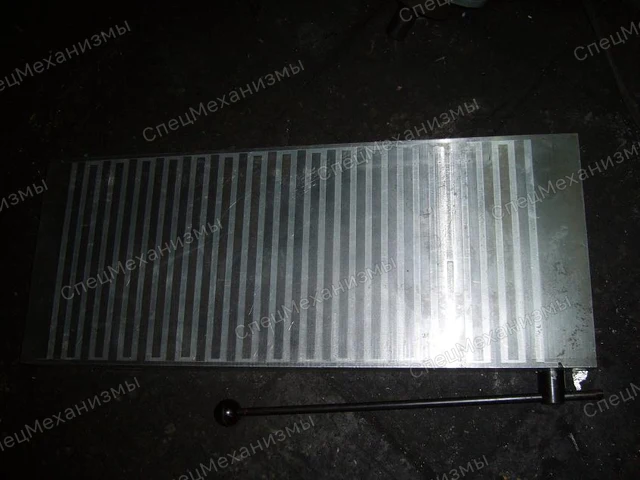
Round electromagnetic chuck 7108-0061 (Ø800 mm)
Magnetic chucks
- Working surface diameter
- 800 mm
- Working surface height
- 130 mm
- Specific magnetic holding force
- 25 N/cm²
 Availability to be confirmed
 Availability to be confirmed
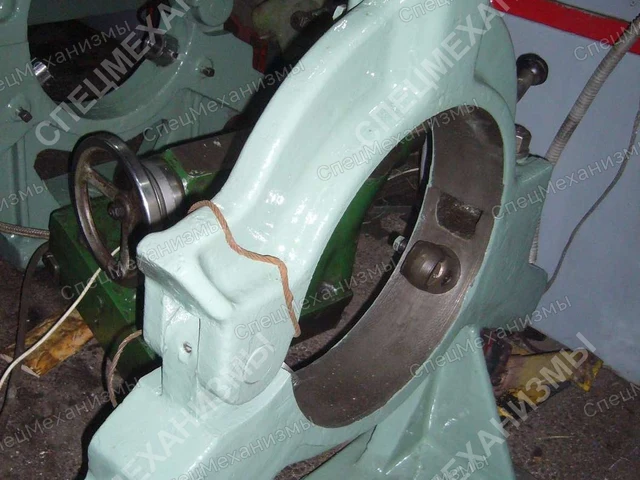
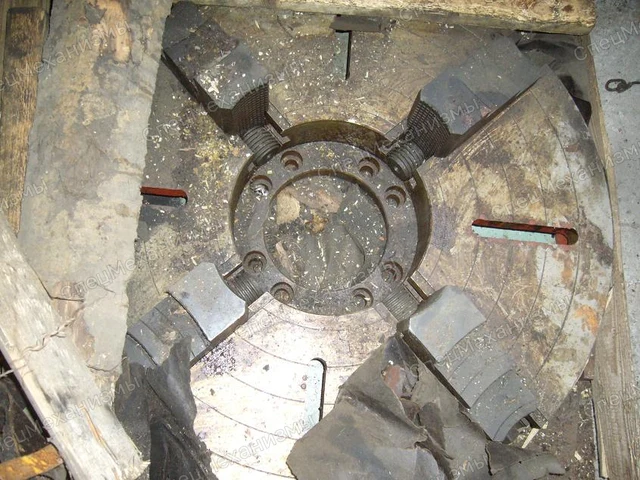
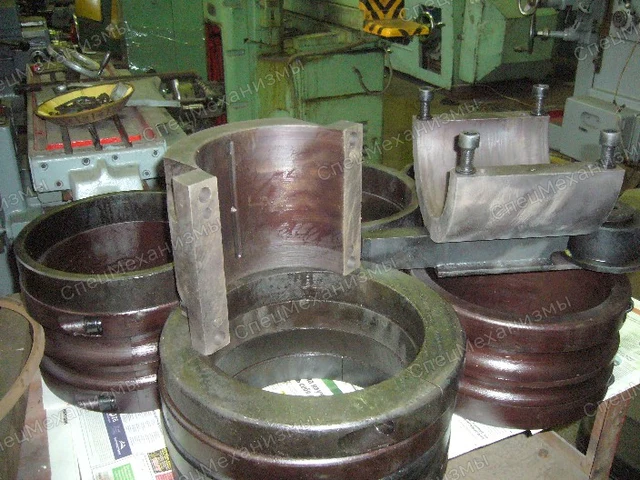
Fixed steady rest for screw-cutting lathes, models 165; 1М65; ДИП500.
Fixed steady rests
- Condition
- To be confirmed
 Availability to be confirmed
 Availability to be confirmed
 Availability to be confirmed
Attachments for the plate bending rolls, model ИБ2222
Tools and fixtures for plate bending rolls
- Condition
- To be confirmed
 Availability to be confirmed
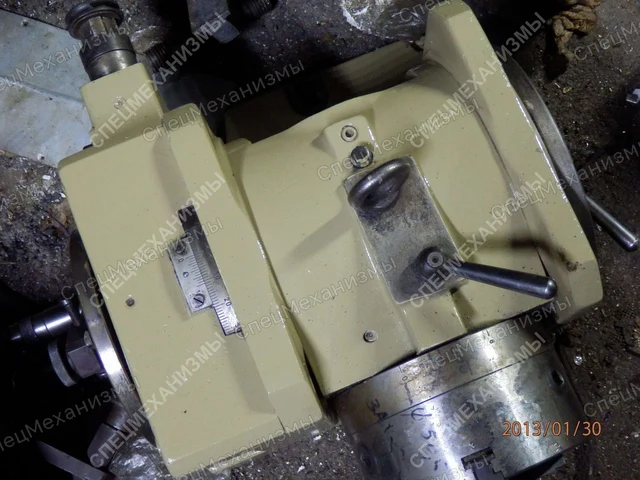
HECKERT universal dividing head (Germany)
Dividing heads
- Specifications
- HECKERT (Germany)
- Maximum workpiece diameter, mm
- 340
- 3-jaw chuck diameter, mm
- 160
Tooling — fixtures for securing workpieces on machines, transporting parts and performing assembly operations.
Production tooling, or as it is often called Machine tooling - A type of tooling designed to secure and correctly position a workpiece on the machine for subsequent machining. It is used at various production stages requiring rigid clamping of parts and assemblies: metal cutting, inspection and assembly.
Machine fixtures locate and secure workpieces on metal-cutting machines. Machine tooling consists of special devices used to mount cutting tools and specialised fixtures on metalworking machines. Tooling also substantially extends equipment capabilities and increases productivity.
Machine tooling and fixtures are essential structures required to perform a particular manufacturing operation.
Types of machine tool fixtures
Machine tool fixtures are divided into 6 groups according to their degree of specialisation:
- Reconfigurable fixtures (provide tolerance grades 8-9);
- УСП – universal modular fixtures (up to tolerance grade 9);
- Universal adjustable fixtures;
- УБП – universal fixtures requiring no setup;
- Non-dismantlable special-purpose fixtures;
- Dedicated adjustable fixtures.
Types of machine tooling
Machine tooling is divided into 4 groups by purpose:
- For mounting parts (collet and jaw chucks, clamps, vices and similar fixtures);
- For mounting cutting tools (tap holders, tool holders, adapter sleeves, etc.);
- For mounting measuring instruments (fixtures for measuring axial and radial runout, setting plates, various stands and similar equipment);
- Auxiliary tooling (stops, rotary tables, overlay jig plates, etc.).
Machine tooling and fixtures are divided into manual, mechanised and automated groups. These devices improve workpiece machining accuracy and increase productivity by speeding up manufacturing operations. Machine fixtures also extend the capabilities of metalworking equipment.
Mechanical engineering uses a wide variety of tooling, including fixtures, auxiliary tools, cutting tools and measuring instruments. Fixtures are additional devices used for machining, assembly and inspection of parts, assemblies and products. By purpose, fixtures are divided into the following types:
- Machine fixtures are used to position and secure workpieces on machines. Depending on the machining type, they are classified as fixtures for drilling, milling, boring, turning, grinding and other machines. Machine fixtures account for 80…90% of all production tooling. Their use provides:
- Improved productivity through shorter workpiece loading and clamping times, partial or complete overlap of auxiliary time with machining time, and reduced machining time through multi-workpiece machining, combining operations and increasing cutting rates;
- Improved machining accuracy by eliminating alignment during setup and the associated errors;
- Improved working conditions for machine operators;
- Expanded equipment capabilities;
- Improved operational safety.
- Fixtures for mounting and securing working tools connect the tool to the machine, while fixtures of the first type connect the workpiece to the machine. Both types are used to set up the machining system.
- Assembly fixtures join mating parts into assemblies and products. They secure base parts or assemblies, ensure correct positioning of components, preassemble elastic elements such as springs and split rings, and create interference-fit joints.
- Inspection fixtures used for intermediate and final inspection of parts and for inspecting assembled machine components.
- Fixtures for gripping, moving and turning workpieces and assemblies, used when machining and assembling heavy parts and products.
By operating characteristics, machine fixtures are classified as universal, for machining various workpieces (machine vices, chucks, dividing heads, rotary tables and similar fixtures); dedicated, for machining a particular workpiece type using interchangeable devices (special vice jaws, shaped chuck jaws and similar components); and special-purpose, for performing specific machining operations on a particular part. Universal fixtures are used in one-off and small-batch production, while dedicated and special-purpose fixtures are used in high-volume and mass production.
Universal modular fixtures are assembled from prefabricated standard elements, parts and assemblies manufactured to high precision. They are used as temporary special-purpose fixtures for a specific operation, after which they are dismantled and their components reused repeatedly in new arrangements and combinations. Further development involves creating units, blocks, individual special parts and assemblies that enable the assembly of temporary special-purpose, dedicated and universal adjustable fixtures.
Assembled and disassembled fixtures (СРП) are also built from standard components, but these are less precise and permit local modifications at mating surfaces. They are used as dedicated fixtures for long-term use. After disassembly, the components can be used to create new arrangements.
Non-dismantlable special-purpose fixtures are assembled from standard general-purpose parts and assemblies as permanent fixtures for long-term use. Their structural components are generally used until fully worn out and are not reused.
A fixture can also be built from two main parts: a standardised base (УБ) and an interchangeable setup (СИ). This design makes a dedicated setup fixture (НСП) adaptable to changes in workpiece design and machining processes. In such cases, only the interchangeable setup is replaced.
General-purpose universal fixtures requiring no setup (УБП) are most common in batch production. They are used to hold rolled-section workpieces and individual blanks. They consist of universal adjustable bodies with permanent, non-removable locating elements, such as chucks and vices, supplied with the machine.
Specialised setup fixtures (СНП) are used for machining parts grouped by design features and locating schemes. Their modular arrangement comprises a basic body structure with interchangeable setups for groups of parts.
Universal adjustable fixtures, like dedicated adjustable fixtures, have fixed bodies and interchangeable parts. However, each interchangeable part is suitable for only one operation on one particular part. When changing operations, universal adjustable fixtures are fitted with new interchangeable setups.
Modular powered clamping systems consist of universal power devices built as separate units. Combined with fixtures, they enable mechanisation and automation of workpiece clamping.
The choice of fixture design largely depends on the type of production. Batch production uses relatively simple fixtures, mainly to achieve the specified workpiece machining accuracy. Mass production also demands high productivity from fixtures, making their designs more complex and requiring quick-action clamps. Even the most expensive fixtures can be economically justified in mass production.
Main fixture elements
Fixtures consist of the following elements:
- Locating elements — for establishing the position of the workpiece surface to be machined relative to the cutting tool;
- Clamping elements — for securing the workpiece;
- Guide elements – to guide the cutting tool in the required direction relative to the surface being machined;
- Fixture bodies — the main component on which all fixture elements are mounted;
- Fasteners — for joining individual elements;
- Indexing or rotary elements – for accurately changing the position of the workpiece surface relative to the cutting tool;
- Powered drives – to generate clamping force. Some fixtures use a single mechanism for both workpiece location and clamping, called a locating and clamping mechanism.